Bake for them two

An excellent perspective of what Jesus expects us to do.

“Christians, our Jesus said to not only follow the law, but to rise to a higher standard of love. Christians should be the FIRST people baking cakes — for everyone who asks us. We should be known for our cake baking. People should be saying, “There go those crazy Christians again, baking cakes for everyone. They just won’t quit!” Then, when we share the reason for our wild, all-inclusive love, people will want to hear it. “Let your light shine before others,” said Jesus, “that they may see your good deeds and glorify your Father in heaven.”

Jessica Kantrowitz's avatarTen Thousand Places

gay weddingIn Jesus’ time, the nation of Israel was under Roman rule. The Israelites were allowed to live there and practice their faith for the most part, but they had to pay taxes to Caesar and obey the Roman laws.

To the Israelites, the Romans were evil and ungodly. They had no place ruling over God’s chosen people in God’s chosen nation. That land had been promised to Moses and his descendants when God brought them out of Egypt. Their very presence in the land was blasphemous.

One of the Roman laws stated that any man could be required to drop what he was doing and carry a Roman soldier’s equipment for him for up to a mile. In the sermon on the mount, with his followers gathered around him, Jesus referenced that law and told his followers what they should do in that case:

“If anyone forces you to go…

View original post 1,322 more words

Posted in Uncategorized | Leave a comment

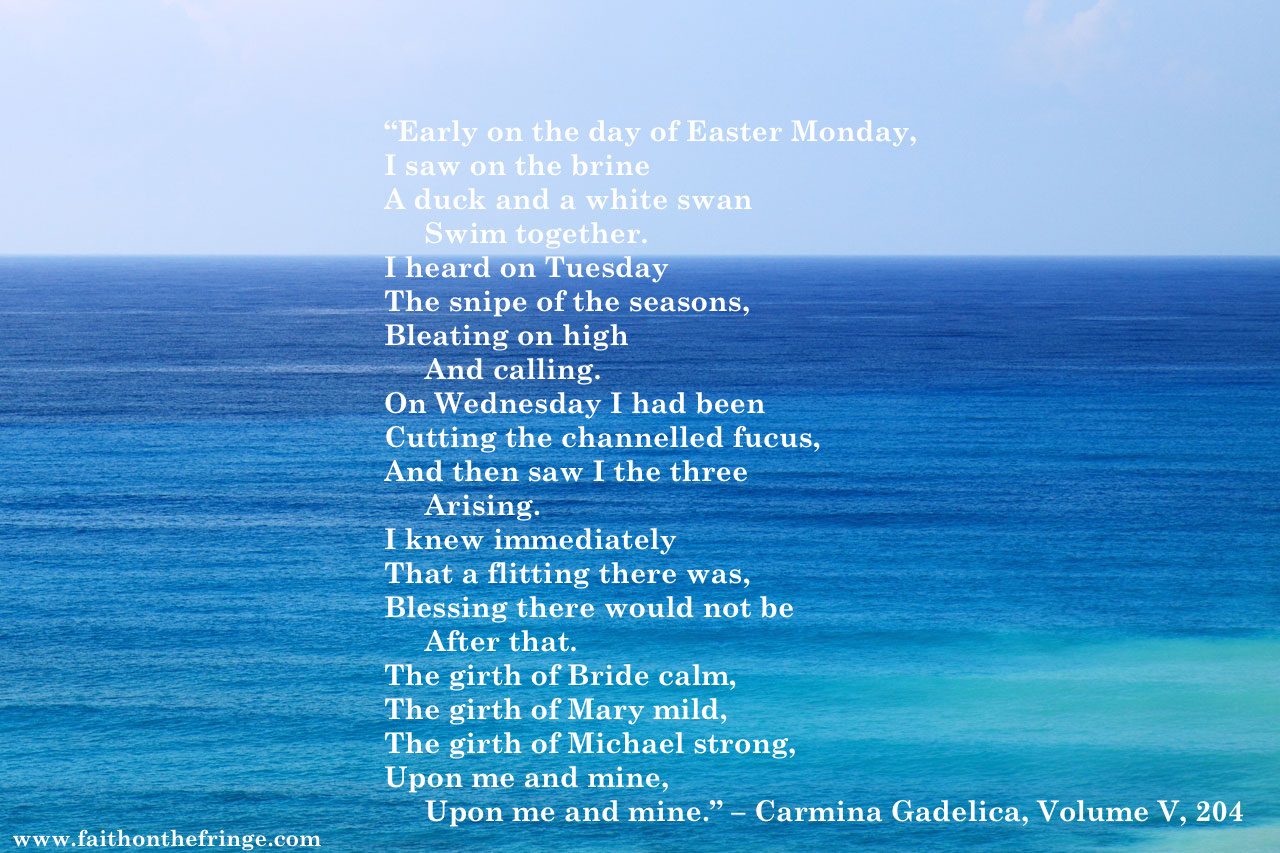
An Easter Monday prayer from the Carmina Gadelica

Early on the day of Easter Monday

A Celtic Prayer

Posted in Uncategorized | Tagged , , , | Leave a comment

Appy Heaster

From Shel Silverstein.

From Shel Silverstein.

Posted in Uncategorized | Tagged , | Leave a comment

A Sermon for Martin Luther King Jr., on the anniversary of his murder

This is a sermon I gave in the past, that I’ve rewritten a little for today.

John 1:29-42 The next day he saw Jesus coming toward him and declared, “Here is the Lamb of God who takes away the sin of the world! 30 This is he of whom I said, ‘After me comes a man who ranks ahead of me because he was before me.’ 31 I myself did not know him; but I came baptizing with water for this reason, that he might be revealed to Israel.” 32 And John testified, “I saw the Spirit descending from heaven like a dove, and it remained on him. 33 I myself did not know him, but the one who sent me to baptize with water said to me, ‘He on whom you see the Spirit descend and remain is the one who baptizes with the Holy Spirit.’ 34 And I myself have seen and have testified that this is the Son of God.” 35 The next day John again was standing with two of his disciples, 36 and as he watched Jesus walk by, he exclaimed, “Look, here is the Lamb of God!”  37 The two disciples heard him say this, and they followed Jesus. 38 When Jesus turned and saw them following, he said to them, “What are you looking for?” They said to him, “Rabbi” (which translated means Teacher), “where are you staying?” 39 He said to them, “Come and see.” They came and saw where he was staying, and they remained with him that day. It was about four o”clock in the afternoon. 40 One of the two who heard John speak and followed him was Andrew, Simon Peter’s brother. 41 He first found his brother Simon and said to him, “We have found the Messiah” (which is translated Anointed). 42 He brought Simon to Jesus, who looked at him and said, “You are Simon son of John. You are to be called Cephas” (which is translated Peter).”

With this scripture, we see the beginning of Jesus’ ministry. Seemingly called to ministry by John the Baptist, Jesus, in turn, calls to ministry first Andrew, and then Simon.

Simon encountered Jesus, and he came away changed, transformed. He became Cephas – Peter.  Like the wise men who found Jesus, and went home another way, changed  – Peter was called by Jesus, and was changed.

Tomorrow, we mark the death of the Rev. Martin Luther King, Jr., who was called to ministry when he was a teenager. One of the best known preachers in the history of the United States, he’s the only minister with his own national holiday.

Most of us have heard the stirring words of his “I Have a Dream” speech, spoken on the steps of the Lincoln Memorial, in 1963, when King quoted scripture, saying, “I have a dream that one day every valley shall be exalted, every hill and mountain shall be made low, the rough places will be made straight and the glory of the Lord shall be revealed and all flesh shall see it together.” He went on to say, “now, I say to you today my friends, even though we face the difficulties of today and tomorrow, I still have a dream. It is a dream deeply rooted in the American dream. I have a dream that one day this nation will rise up and live out the true meaning of its creed: ‘we hold these truths to be self-evident, that all men are created equal.”

I could go on and on, quoting that speech, many of us have heard at least some parts of it, many times.

But let me share a little information that may help you see Martin Luther King Jr. as a man and more than a legend. More than a holiday.

He was only 26 years-old, with a new Doctorate, and a relatively new pastorate at Dexter Avenue Baptist Church, called to ministry like Andrew and Peter, when he was called to lead the local bus boycott in Montgomery, Alabama. And a civil rights leader was born.
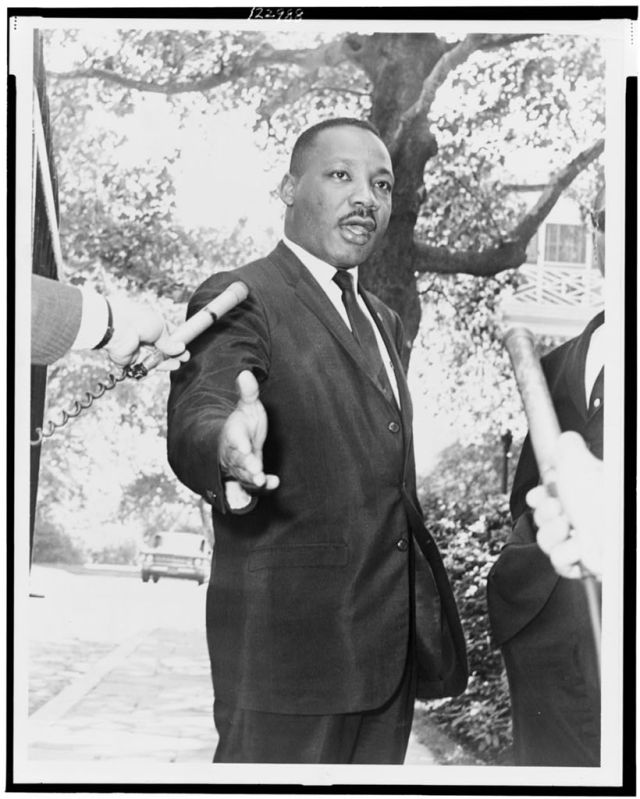
3c22988v

As he led the struggle against segregation, he was constantly exposed to threats, insults, and verbal abuse. King was repeatedly arrested by police, and pelted with rocks during marches. A firebomb exploded on the front porch of his house, while his little children slept inside.

In 1958, at a book signing in Harlem, a deranged black woman stabbed King in the chest with a letter opener, just inches away from his heart.

Despite the violence surrounding his life and the civil rights struggle, King’s calling to the civil rights movement, and his dedication to nonviolence, were legendary.

And yet, despite his dedication to nonviolence, King was murdered April 4, 1968. He was 39 years-old.

King reminds us that violence isn’t new, and that even those called by God, the most visible leaders, are vulnerable to violence. Even the most vigorous leaders, can become victims of violence. The most peaceful, can face most un-peaceful endings.

Indeed, Christ himself, became a victim of those he came to save.

King was passionately dedicated to the cause of peace, and in Stockholm, Sweden, during the acceptance of his Nobel Peace Prize, in 1964, King said “Nonviolence is the answer to the crucial political and moral questions of our time: the need for man to overcome oppression and violence without resorting to oppression and violence. Man must evolve for all human conflict a method which rejects revenge, aggression and retaliation. The foundation of such a method is love.”

Love.

The response to violence is love. That is the message and lesson of Jesus, and the message and lesson of Martin Luther King Jr.

And with love, comes forgiveness.

What does love that leads to forgiveness look like?

The love of Jesus who begged God’s forgiveness of those who executed him as he hung on a cross.

If Jesus forgave them, if God forgave those who executed Jesus, if God loves us enough to forgive us, then surely we can forgive others. Surely we can forgive others.

As King wrote, “It is impossible even to begin the act of loving one’s enemies without the prior acceptance of the necessity, over and over again, of forgiving those who inflict evil and injury upon us . . . Forgiveness is a catalyst creating the atmosphere necessary for a fresh start and a new beginning.”

There are only two choices, love and forgiveness, or hate.

There is no middle ground. Just as light and darkness can’t exist in the same place, a heart feels love or it feels hate. It can’t feel both. We can love others or hate others. We can respond with hate or we can respond with love. We can share and spread love or we can share and spread hate.

As King wrote in 1963, “darkness cannot drive out darkness; only light can do that. Hate cannot drive out hate; only love can do that. Hate multiplies hate, violence multiplies violence, and toughness multiplies toughness in a descending spiral of destruction. . . . The chain reaction of evil—hate begetting hate, wars producing more wars—must be broken, or we shall be plunged into the dark abyss of annihilation.”

It is easy to be shocked by hatred, bigotry and the seemingly senseless violence in our country and our world.

If we do not love, if we do not forgive, then we are simply succumbing to violence. We fight hate with love or we abandon love and accept hate.

The theologian Reinhold Niebuhr wrote, “nothing that is worth doing can be achieved in our lifetime; therefore, we must be saved by hope. . . . Nothing we do, however virtuous, can be accomplished alone; therefore, we are saved by love. No virtuous act is quite as virtuous from the standpoint of our friend or foe as it is from our standpoint. Therefore, we must be saved by the final form of love, which is forgiveness.”

Without love, there is no forgiveness, and without forgiveness, there is only hate.

King wrote, “Like an unchecked cancer, hate corrodes the personality and eats away its vital unity. Hate destroys a man’s sense of values and his objectivity. It causes him to describe the beautiful as ugly and the ugly as beautiful, and to confuse the true with the false and the false with the true.”

When we hear of these so-called ‘religious freedom’ laws popping up around the country, do they represent love of others, or do they give cover for discrimination and hate?

Love is stronger than hate. The love of God who created us, and cares for us, and keeps us close.

Laws that give license to discriminate under the guise of ‘freedom’ are unjust and worthy of opposition. But they should be opposed in love and not hate.

We respond with love, compassion, sensitivity, decency, civility and modesty. We respond to hate with love.

Each year at this time, I am reminded of the response of Robert Kennedy, following the assassination of Martin Luther King, Jr.

King was killed around 6 p.m., as he was preparing to go to dinner. About an hour later, Robert Kennedy was scheduled to speak at a campaign rally in Indianapolis, Indiana.

The people had been gathering for more than an hour, and they had no idea King was dead. It was up to Kennedy to tell them.

This is what he said to the crowd, word for word:

“Ladies and Gentlemen,

I’m only going to talk to you just for a minute or so this evening, because I have some—some very sad news for all of you—Could you lower those signs, please? — I have some very sad news for all of you, and, I think, sad news for all of our fellow citizens, and people who love peace all over the world; and that is that Martin Luther King was shot and was killed tonight in Memphis, Tennessee.

Martin Luther King dedicated his life to love and to justice between fellow human beings. He died in the cause of that effort. In this difficult day, in this difficult time for the United States, it’s perhaps well to ask what kind of a nation we are and what direction we want to move in. For those of you who are black—considering the evidence evidently is that there were white people who were responsible—you can be filled with bitterness, and with hatred, and a desire for revenge.

We can move in that direction as a country, in greater polarization—black people amongst blacks, and white amongst whites, filled with hatred toward one another. Or we can make an effort, as Martin Luther King did, to understand, and to comprehend, and replace that violence, that stain of bloodshed that has spread across our land, with an effort to understand, compassion, and love.

For those of you who are black and are tempted to fill with—be filled with hatred and mistrust of the injustice of such an act, against all white people, I would only say that I can also feel in my own heart the same kind of feeling. I had a member of my family killed, but he was killed by a white man.

But we have to make an effort in the United States. We have to make an effort to understand, to get beyond, or go beyond these rather difficult times.

My favorite poem, my—my favorite poet was Aeschylus. And he once wrote:

Even in our sleep, pain which cannot forget

falls drop by drop upon the heart,

until, in our own despair,

against our will,

comes wisdom

through the awful grace of God.

What we need in the United States is not division; what we need in the United States is not hatred; what we need in the United States is not violence and lawlessness, but is love, and wisdom, and compassion toward one another, and a feeling of justice toward those who still suffer within our country, whether they be white or whether they be black.

So I ask you tonight to return home, to say a prayer for the family of Martin Luther King—yeah, it’s true—but more importantly to say a prayer for our own country, which all of us love—a prayer for understanding and that compassion of which I spoke.

We can do well in this country. We will have difficult times. We’ve had difficult times in the past, but we—and we will have difficult times in the future. It is not the end of violence; it is not the end of lawlessness; and it’s not the end of disorder.

But the vast majority of white people and the vast majority of black people in this country want to live together, want to improve the quality of our life, and want justice for all human beings that abide in our land.

And let’s dedicate ourselves to what the Greeks wrote so many years ago: to tame the savageness of man and make gentle the life of this world. Let us dedicate ourselves to that, and say a prayer for our country and for our people.

Thank you very much.”

And of course, Robert Kennedy himself was murdered two months later.

“What we need in the United States is not division; what we need in the United States is not hatred; what we need in the United States is not violence and lawlessness, but is love, and wisdom, and compassion toward one another, and a feeling of justice toward those who still suffer within our country . . .”

Amen.

Posted in Uncategorized | Tagged , , , , , , | Leave a comment

For Good Friday

Here’s a wonderful excerpt of an interview with Bono, as he patiently and simply explains his faith in Christ.

“I find it hard to accept, that millions and millions of lives, half the earth, for two thousand years, have been touched, have felt their lives touched, and inspired by some nutter,” Bono says. “I just don’t believe it.”

I agree with him.

This was one of the thing that helped me move from being an agnostic to being a follower of Jesus. Were all the Christians for two millennia just delusional? All of them? Bono explains it well. They were touched by their relationship with Christ.

Posted in Uncategorized | Tagged , , , , | 2 Comments

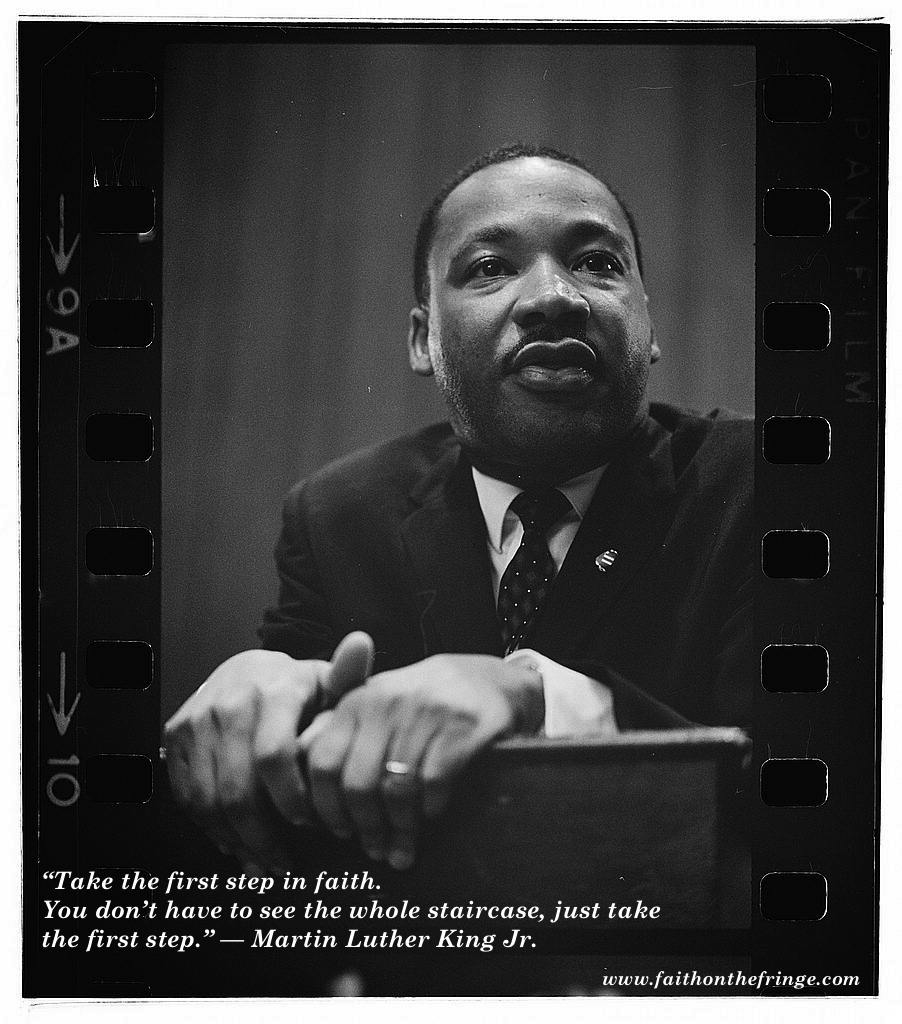
MLK Faith

Posted in Uncategorized | Tagged , , | Leave a comment

Celebrating pagan holidays

Listen to anyone criticize Christianity and eventually they may mention the notion that Christian holidays are based on pagan holidays.

LentWhich would make sense if ancient Christians celebrated modern holidays like Christmas and Easter. But they didn’t.

The book of Acts and the letters of the New Testament are the first and best accounts of what the earliest Christians did and didn’t do. (There you can find what some people call ‘contradictions,’ which are in fact different accounts of early traditions and beliefs. Different views of baptism can be based on different interpretations of different scriptures, for example. But I digress.)

The accounts of the birth of Christ in the Gospels are rather limited in content (a non-Christian criticism). They don’t mention December 25.

Easter as a holiday isn’t in the Bible at all.

The first followers of Jesus lived on the fringe of the mainstream culture, where they would gather for meals, fellowship, baptism, and worship. They didn’t exchange gifts or look for hidden eggs.

For non-Christians to focus on Easter as a pagan holiday is just silly. Easter wasn’t an early Christian holiday.

Correlation isn’t causation. What have become Christian traditions, (Easter, Christmas, Catholic confession, the shape of the cross, paid clergy) doesn’t mean they were Christian traditions or sacraments for the first followers of Jesus.

It’s like the creation of early roads. First there was a path, then a muddy trail. Then a road wide enough to accommodate  horse drawn carts. Eventually, the road was widened yet again to accommodate more traffic.

The road didn’t create the traffic, the traffic necessitated the establishment of roads.

First there was a traveler walking the way, and then followers, who eventually forged a path.

First there was Jesus. And then his followers. Then a church hierarchy arose to mediate disagreements and disputes. The followers of Jesus had firmly established the faith by the time church leaders created the first church calendar, including well-known holidays.

Church leaders didn’t create Christianity, Christianity created church leaders. An important distinction that non-believers fail to make.

Did Christians co-opt pagan traditions when creating the Church? Or did pagans find truth in the message of Jesus and bring their traditions with them? Pagans bringing their traditions into the faith with them is called syncretism, and because it happened, and continues to happen, doesn’t diminish at all the foundation of the faith in the person of Jesus.

Some atheists see a Mithra-Christ connection. Again, correlation isn’t causation. Because some things are similar, doesn’t mean they caused each other, or were even related.

Saying Christians supported pagan holidays because of the origins of the holidays is like saying people celebrating New Year’s Eve support the Roman god Janus because the month of January takes its name from Janus.

Dates, calendars, holidays, time – these are all human inventions. Artificial constructs intended to project a sense of security on an volatile, infinite creation.

Dates don’t matter. The Parthenon was built. The pyramids stand in Egypt. Sequoias in California are among the oldest living things on earth. Like Jesus, they were here before we were, and they will remain after we are gone.

It matters not when Jesus was born or what the weather was like the day he was executed by the government.

Undeniably, something happened 2,000 years ago that changed the course of humanity’s development, like a river rerouted by a natural occurrence. The world was changed, humanity was changed and people were changed on a deeply personal level.

Because people were changed, they chose to celebrate the change. That celebration will commence in a week with Maundy Thursday, Good Friday and Easter Sunday. Again, the dates don’t matter because the reason of the celebration exists independent of human calendars or clocks or institutions.

The celebration will commence because people’s lives were changed.

The celebration will commence.

Posted in Uncategorized | Tagged , , , , , , , , , , , , | 3 Comments

An Irish prayer

An Irish prayer

Posted in Uncategorized | Tagged , , | Leave a comment

Carmina Gadelica, Volume I, 4 – a Celtic prayer

Carmina Gadelica, Volume I, 4

Posted in Uncategorized | Tagged , | Leave a comment

Jesus and Socrates – for non-Christians

We have exactly zero writings of Socrates today, do you believe he existed?

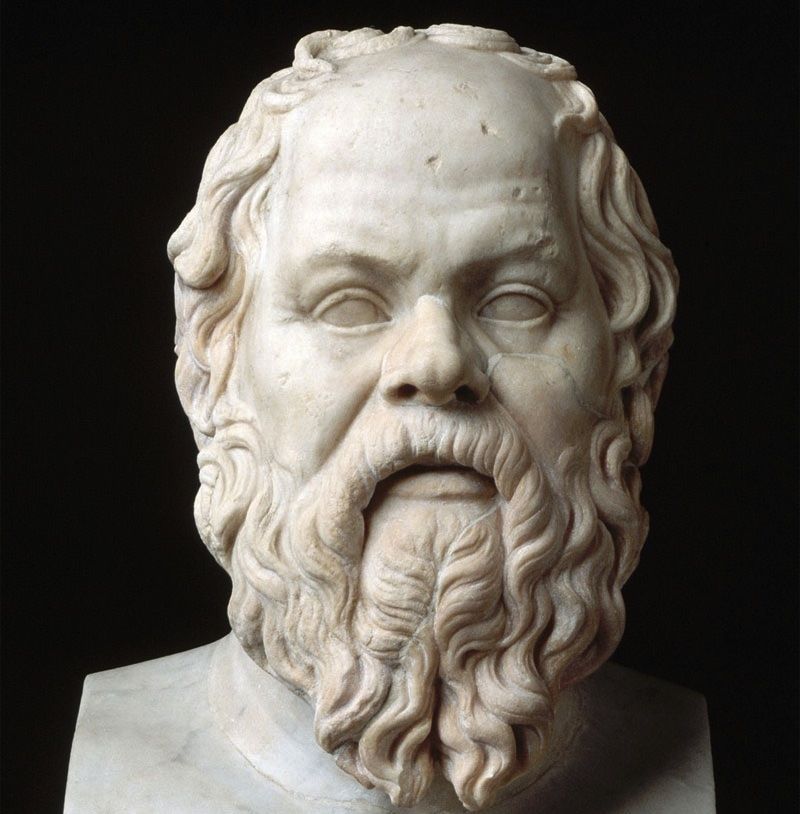
Socrates

If you take the four Gospels, and consider them as the four different accounts they are, written at four different places, at different times, by different people, then toss in Paul’s letters, and the Acts of the Apostles (written by the author of Luke) you’ll have more documented authors writing about Jesus than you have writing about Socrates.

The common confusion comes from looking at the Bible as one book, rather than as an anthology of 66 different books, which it is.

So, four or five different authors writing about Jesus.

Three authors writing about Socrates.

And not one scrap of paper remains written personally by either Jesus or Socrates. All that exists is oral traditions of each, recorded by others and passed down through time for thousands of years.

Again . . . Jesus and Socrates . . . why is one easier to accept than the other?

Your answer may say more about you than it says about Socrates or Jesus.

Posted in Uncategorized | Tagged , , , , | 9 Comments

I’m a horrible example of a Christian

I’ve determined I’m a horrible example of a Christian.

(I am a wonderful father, just not someone you can point to and say, “he is a good example of a Christian.”)

I reached this conclusion during a time of deep introspection.

The 40 days of Lent represent the 40 days Jesus spent in the wilderness which represent the 40 years the Israelites spent in the wilderness.

During the Lenten season we look inwardly and consider our lives and actions.

While experiencing a brief moment of both introspection and clarity, I concluded that I’m a horrible example of a Christian.

I found Jesus a little more than 13 years ago, at the lowest point of my life. When we reach a low point, we can find that God is already there. Before that, I was a terrible person.

Lent

I was like an old bail of rusting barbwire – a tangle of insecurity, hostility, jealousy, insensitivity, addiction, attitude, arrogance,  cynicism, and selfishness.

I had little idea of how unpleasant and miserable I was, because living that way was my normal.

Like fingerprints imprinted in wet clay, when the pottery is fired to stoneware, many of those characteristics remain a part of me to some degree.

Jesus helps to remove our rough edges, like a potter cleaning and sanding a fired piece. But sometimes not even the Lord can sand out all the imperfections.

That’s why there are jerky or judgmental or generally disagreeable people in churches. Can you imagine how bad they would be if they didn’t have Jesus and church?

Without Jesus, mildly tolerable people would be insufferable.

I’m talking about people I’ve met in every church I’ve entered, and myself, of course. And I’ve met some really unpleasant Christians.

I’ve met some wonderful, Grace-filled Christians, as well. In addition to my wife, I could name dozens of people who walk with Jesus seemingly all the time. (Grace-filled people I know would deny they are as Grace-filled as they appear to others. That’s part of what makes them Grace-filled.) These people appear to me to be closer to God than they are the world. It’s like the Lord has touched their hearts in a unique way.

Paul goes so far as to say that for people with the law of God written upon their hearts, the law may be enough. If the law was written upon my heart, it was obscured beyond legibility years ago by the things of this world. So I desperately need Jesus.

I’m not talking about salvation, damnation, or condemnation. I’m saying the daily presence of Jesus in my life and recognizing God in the world has helped me be a better person. I’m not worried about Jesus saving me from the eternal damnation of hell as much as I want Jesus to save me from thoughtlessly or offensively insulting a friend, coworker or stranger.

(“You’re not worried about salvation and eternal damnation?” you may be asking. Not as much as I worry about being a jerk, right now. For an explanation, I refer you back to the first sentence.)

Grace-filled people seem to be less bothered by irritating people. They’ll admit they get bothered, they just aren’t as affected as others.

I try to be more like Grace-filled people and less like angry Christians. But it isn’t easy. Some people are really irritating.

To say I was worse before I found Jesus may be cold comfort to people I hurt today. In some ways, I’m much better than I was. In other ways, Jesus and I are still trying. I’m not where I used to be, but I’m not where I want to be.

I’m no longer a two pack a day smoker. But I miss it. I still drink. But not as much. I still curse. But not as much.

When I say “Jesus Christ,” I try to convince myself I’m not cursing, I’m simply offering a brief, concise prayer for the person who is irritating me. And I try to remember the irritating person is a child of God, born in the image of God, just as I.

We Christians hold ourselves to a higher standard. Tragically, too many Christians get scripture so backwards wrong that they think they are supposed to hold everyone else to the higher standard or worse, it gives them a license to discriminate. But when they can’t live up to the high standard they cover themselves with a blanket of forgiveness they refuse to share with others as they excuse their own sins by saying “we all fall short of the glory of God.” It’s curious how some Christians can see the sins of others so clearly, but are hypocritically blind to their own sins.

Some Christians understand scripture so well they think they can interpret it and judge others with it.

Again, I’m a horrible example of a Christian, I’m not so well versed in scripture that I feel comfortable judging others.

I do know that Jesus says that to find ourselves we must lose ourselves.

But our human nature isn’t to let go and surrender to the seemingly un-seeable, it’s to hold tighter to the world and the things that make us comfortable. The world conditions us to be fragmented, and we hide the fragmentation behind claims of intelligence, logic and sophistication rather than surrender ourselves.

Our true essence, our spiritual selves, our souls, must overcome the lessons of the world and learn to let go. We can be restored when we surrender to the Spirit that created us.

It was only after many years did I learn that the things of this world are worthless and fleeting. Paradoxically, as I’ve succeeded in letting go of this world and who I was, through Jesus I have found who I was created to be.

We are spending our lives anyway. Drawing down daily on a finite account, not knowing which day will be our final withdraw.

We can spend our lives in our comfort zones or we can fulfill our possibilities and be who we were created to be.

Jesus offers us a better way to be. A better way to spend our precious lives.

But, don’t just take my word for it, as I said, I’m a horrible example of a Christian.

Posted in Uncategorized | Tagged , , , , , , , , , , | 1 Comment

An Irish prayer

irish-atlantic-coast-64951288172474n8Bz

Posted in Uncategorized | Tagged , , , | Leave a comment

The devil went down to Georgia

Have you heard about Kelly Renee Gissendaner? The Georgia woman is on death row for a murder she didn’t commit, but did plan with her lover, the actual killer. Her lover, Gregory Owen, plead guilty to the murder and assisted the prosecution. Owen will be eligible for parole in a few years.

Evidently this is what passes for justice in Georgia.

Gissendaner’s execution has been stayed twice, the second time for a problem with the drugs intended to kill her. The problem led Georgia to issue a moratorium on executions. Her lawyers have filed a lawsuit on her behalf because her weeks spent waiting for her execution interrupted by delays amounts to cruel punishment.

While in prison, Gissendander has changed dramatically. And some Christians have called the delays a miracle.

“I hope that Kelly’s story will show people across the country that personal transformation does happen,” said Jim Wallis, president and founder of Sojourners, “and the death penalty is wrong because it denies fellow human beings that opportunity to repent and be transformed.”

Wallis sums up a major problem with capital punishment. Once a prisoner is dead, so too is the opportunity for repentance.

So why would Christians – Christians who want people to repent and be saved by Jesus – ever support the death penalty and support denying people the opportunity to be saved?

I believe it’s because those Christians are more focused on the world, and crime and justice and law and order, than they are on Jesus. It’s that simple.

Christians who support executions want earthly justice in this world, even if it denies someone the opportunity to be redeemed by God.

When Christians think like this, is it any wonder non-Christians don’t want anything to do with them?

A 4158

Posted in Uncategorized | Tagged , , , , , | Leave a comment

Namaste at Costco

Shopping at Costco today, my wife and baby and I garnered a lot of attention because we were wearing matching hockey jerseys.

She turned 13 months-old this week.

She turned 13 months-old this week.

Checking out, I struck up a brief conversation with the man boxing our items.

Probably in his late 50s, the man commented that as an immigrant, he appreciated learning new information. We talked about several things, including my baby, riding on my shoulders.

After checking out, I put our baby back in the cart and as we turned to leave, I said to the man, “Namaste.”

This Hindu word literally means, “the Divine in me, recognizes or bows to the Divine in you.”

“I’m Pakistani,” the man responded cordially. “We say, Assalam Alaikum.”

I immediately responded, “wa Alaikum Assalam.”

The man was very pleased, and as we left, he turned to someone else and asked, “did you hear? He said, ‘wa Alaikum Assalam.’”

Paying respect to the man by honoring his faith didn’t diminish my own faith in any way.

I didn’t disrespect Jesus by respecting a Muslim stranger. (On the other hand, this Christian perspective is disrespectful to everyone, including Jesus.)

In fact, my own faith was strengthened because the Divine in me did recognize the Divine in him, and in the recognizing, my faith was made stronger.

Faith on the Fringe had visitors from eight countries today, including the USA. This reminds me that what I write from the perspective of a Christian in the United States, is read from many perspectives around the world.

Namaste.

Assalam Alaikum.

The peace of Christ be with you.

Posted in Uncategorized | Tagged , , , , , , | 1 Comment