-
Find Faith on the Fringe on Facebook
Archives
- January 2026
- December 2025
- November 2025
- September 2025
- June 2025
- May 2025
- April 2025
- March 2025
- January 2025
- December 2024
- November 2024
- October 2024
- September 2024
- August 2024
- June 2024
- May 2024
- March 2024
- September 2020
- August 2020
- July 2020
- June 2020
- April 2020
- February 2020
- May 2019
- June 2018
- May 2018
- April 2018
- March 2018
- February 2018
- January 2018
- December 2017
- November 2017
- October 2017
- September 2017
- August 2017
- July 2017
- June 2017
- May 2017
- April 2017
- March 2017
- February 2017
- January 2017
- December 2016
- November 2016
- October 2016
- September 2016
- August 2016
- July 2016
- June 2016
- May 2016
- April 2016
- March 2016
- February 2016
- January 2016
- December 2015
- November 2015
- October 2015
- September 2015
- August 2015
- July 2015
- June 2015
- May 2015
- April 2015
- March 2015
- February 2015
- January 2015
A question about photos from South Carolina
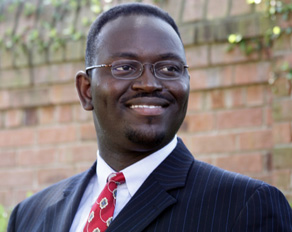
By now, we’ve seen photos of the accused assassin of Rev. Clem Pinckney and eight others
at “Mother Emanuel” AME Church, in Charleston, S.C. (I refuse to write his name.)
We’ve seen the photos of him holding a racist flag. I’ve read what are believed to be examples of his hate-filled writing.
My question is – who took his pictures? Is there an equally angry, equally racist friend of his out there?
An ugly cycle of racial terrorism
The facts of the church shooting in Charleston, South Carolina are unfolding. But the deeper causes are like the rotted roots of an abscessed and infected tooth.
In the moments after hearing the news, my thoughts went to another racist attack in a church that left four little girls dead and nearly two dozen injured.

The four girls killed. Clockwise from top left: Addie Mae Collins, 14, Cynthia Wesley, 14, Carole Robertson, 14, and Denise McNair, 11.
It’s been 52 years since the bombing of the 16th Street Baptist Church in Birmingham, Alabama. But we again have innocent people dead at the altar of injustice.
The morning after the shooting, President Obama recalled the Birmingham bombing, and quoted Dr. King’s eulogy for three of the children,
“He said they lived meaningful lives, and they died nobly. “They say to each of us,” Dr. King said, “black and white alike, that we must substitute courage for caution. They say to us that we must be concerned not merely with [about] who murdered them, but about the system, the way of life, the philosophy which produced the murderers. Their death says to us that we must work passionately and unrelentingly for the realization of the American Dream.””
King hoped that “this tragic event may cause the white South to come to terms with its conscience.”
And yet it didn’t.
In the years that followed, black people were clubbed, gassed, and attacked by police and subjected to even worse abuses by the public. Racists were hardened, not softened, in the aftermath of the church bombing.
A harbinger of hope, King urged the thousands attending the service not to “lose faith in our white brothers. Somehow we must believe that the most misguided among them can learn to respect the dignity and the worth of all human personality.”
And here we are, today. Teenage girls in swimsuits are assaulted by police and the white response is that blacks should be more submissive to their abusers.
Here we are: where we exist in our own bubbles of beliefs reinforced by cable channels, talk radio, and websites, no matter how racist or offensive.
In the aftermath of the shooting, South Carolina Rep. Mark Sanford posted on Facebook, “. . . I don’t understand and can’t comprehend this sort of malice.”
Here we are: where candid discussions about race are nearly impossible, because white leaders can’t comprehend racism.
In a Supreme Court decision handed down the day after the shooting, the majority ruled that the state of Texas could reject a specialty license plate request from the Sons of Confederate Veterans, because, “specialty license plates issued pursuant to Texas’s statutory scheme convey government speech. . . . Indeed, a person who displays a message on a Texas license plate likely intends to convey to the public that the State has endorsed that message.”
South Carolina has the Confederate Flag nearly on the steps of the state house; a monument to a racist society that viewed black people as less than human, endorsed by the government, and codified by the citizenry.

A Confederate flag, part of a Civil War memorial on the grounds of the South Carolina State House, flies over a Martin Luther King Day rally Jan. 21, 2008 in Columbia, South Carolina. Photo by Chris Hondros/Getty Images.
This is about racism.
Racism.
Racism.
Speaking after the shooting, President Obama said, “The fact that this took place in a black church obviously also raises questions about a dark part of our history.”
That dark part of our history, is here, now, today, where the President of the United States and his family are the target of racist comments in the mainstream culture.
What happened in Charleston is racist terrorism. As loud as a bomb and as bright as a burning cross.
To fail to acknowledge racism is to abet it.
And yet again, our society — with a rotten core built with the labor of slaves — will be unable to see the cause of the killing. A gun facilitated the murders, but a racist emboldened by a racist society, pulled the trigger.
God is on the side of the marginalized, the victims. The oppressed. And this was oppression.
Writing about slavery, Thomas Jefferson told a friend, “Indeed I tremble for my country when I reflect that God is just: that his justice cannot sleep for ever . . .“
God is just, but it’s up to us, here, now, to be the instruments of God’s justice. To demand justice and to oppose racism in every form. To pray for the dead and the hurt, and to demand justice, and equality and opportunity for all the oppressed.
Amen.
Posted in in the news
Tagged Charleston, Mark Sanford, Martin Luther King JR., President Obama, Racism, South Carolina, US Supreme Court
Leave a comment
Strange bedfellows
This is awkward.
In a June 5 Facebook post, Franklin Graham suggested it’s time to “fight the tide of moral decay that is being crammed down our throats by big business, the media, and the gay & lesbian community.”
Because Wells Fargo uses a same-sex couple in its advertising, the Billy Graham Evangelistic Association moved their accounts to another bank.
“This is one way we as Christians can speak out— we have the power of choice,” Franklin wrote on Facebook. “Let’s just stop doing business with those who promote sin and stand against Almighty God’s laws and His standards.”
Franklin’s popular autobiography, Rebel With a Cause, was published by Thomas Nelson, a Christian publishing company. Thomas Nelson’s publicity is handled by a company called Rogers & Cowan. One of the largest public relations firms in the world, Rogers & Cowan also is the publicist for—
Caitlyn Jenner.
Whoops.
So, the same company that promotes some of Franklin Graham’s books and the books of his father, and by extension, Graham himself, also promotes Caitlyn Jenner, and helped to turn around the careers of Robert Downey Jr, and Britney Spears.
This is awkward.
To his credit, Graham is one of the few conservative Christians not to have rained criticism down on Jenner’s Vanity Fair magazine announcement.
Graham simply pointed out that, “changing the outside doesn’t change the inside.”
But the conservative Christian community has been overwhelmingly opposed to Jenner’s lifestyle choices.
Public relations makes strange bedfellows.
Or as the Wizard of Oz said as Toto pulled back the curtain to reveal the man working the controls behind a massive green head, “pay no attention to the man behind the curtain.”
In our modern world, controversial actresses like Lindsay Lohan and the dozens of Women of Faith conferences around the country are represented by the same PR company, (also Rogers & Cowan).
Sometimes we have to do business with people with whom we disagree. The example of Jesus is that we eat with, and talk with, and be around people who are different than us, or who have different faith traditions, or who aren’t where we are morally, physically, or emotionally.
But it’s not just our modern world. Jesus was all about being with people outside the faith tradition and spending time with those on the fringe of the faith. He constantly interacted with the dominant culture (the Roman occupiers) as well as the ostracized on the edges of society – women, adulterers, criminals, the sick and infirmed. Sinners.
Jesus was the exact opposite of boycotting others. His entire message was about loving those who are different. What good is loving those who love us, Jesus asked, when it’s much harder and more important to love those who don’t love us, who don’t understand or stand for God’s laws and standards?
Jesus wouldn’t boycott anyone, so why should we?
And besides, as Graham is learning, sometimes those big businesses cramming moral decay down our throats are also the same businesses that help spread the Good News and cram money into his pocket.
A gendered God
Have you heard about this, from the Guardian?
Let God be a ‘she,’ says Church of England women’s group
“A group within the Church of England is calling for God to be referred to as female following the selection of the first female bishops.
“The group wants the church to recognise the equal status of women by overhauling official liturgy, which is made up almost exclusively of male language and imagery to describe God.
“Rev Jody Stowell, a member of Women and the Church (Watch), the pressure group that led the campaign for female bishops, said: ‘Orthodox theology says all human beings are made in the image of God, that God does not have a gender. He encompasses gender – he is both male and female and beyond male and female. So when we only speak of God in the male form, that’s actually giving us a deficient understanding of who God is.’”
Let’s stop right here . . . Rev. Stowell uses “He” to describe God while suggesting that “She” should be used to describe God.
Evidently, old habits may be more difficult to change than Rev. Stowell realizes.
It’s also curious that Rev. Stowell doesn’t mention, (or the article fails to report), that God already is referred to in feminine terms in the Hebrew scriptures. (Unless you read Hebrew, you probably don’t know this. It’s easy to blame your pastor for not teaching the etymology of some words, but if Rev. Stowell can’t mention it in this context, who will?)
In Hebrew, Wisdom and Spirit (ruach, or breath) are feminine words. So any verse in the Hebrew scripture that speaks to the Wisdom or Spirit of God is referring to the feminine aspects of God.
I agree with these clergy that God is more than male terms. I would assert that even more than a “deficient” understanding of God, male words to describe God makes it easier to accept bad, patriarchal theology that can easily marginalize women.
But using feminine words to describe God really doesn’t do much good, either.
All language falls short, so why would we willingly persist in using a failed vernacular when overhauling the official liturgy?
Rather than add feminine words, why not remove the male words?
God
The Lord
The Creator
The Divine
The Holy Spirit
the Spirit
the
Breath of God
sounds much better than
He.
Doesn’t it?
Posted in Uncategorized
Tagged Church of England, God, Holy Spirit, patriarchal theology, Rev. Jody Stowell, Ruach, Spirit
5 Comments
God loves you
This thought gives me great comfort.
How does this make you feel?
What thoughts do you have when you are reminded that God loves you?
U.S. Christian churches are losing members (or, how Rob Bell learned to stop worrying about Jesus and embrace a national tour)
Look at the United States, and according to the U.S. Census, here’s what you’ll see.
The average American is a woman. More than 75 percent of the country is white. More than 20 percent of the households speak a language other than English. The median household income is $53,000 and around 14 percent live in poverty.
When the conversation turns to faith, according to a new study from the Pew Research Center, 70 percent of the country remains Christian, but a growing number, nearly 23 percent, say they are religiously unaffiliated – “describing themselves as atheist, agnostic or ‘nothing in particular.’”
This is telling. But it appears to be telling different things to different people.
It’s bad for mainstream Christianity in the USA.
It certainly has a lot of people typing.
Are the findings of the study as dire as some are reporting?
Or is it simply dire for church boards and denominational leaders trying to keep the lights on and pay the heat bill in January as both younger people and their parents leave the church.
According to the study, “using the margins of error to calculate a probable range of estimates, it appears that the number of Christian adults in the U.S. has shrunk by somewhere between 2.8 million and 7.8 million.”
This shift away from Christianity is a growing, decades-long trend with roots in the cultural clashes of the 1960s and 70s. The shift has happened as the nation has shifted away from indoor malls, drive-in movie theaters, and downtown inner cities and towards gluten-free foods, Starbucks, and the suburbs.
And don’t forget Blue Laws. As businesses were able to open their doors on Sundays, church attendance diminished. People had other things to do on Sunday instead of church.
Americans don’t go to church as much as they did in years past, but increasingly, more people call themselves spiritual rather than Christian.
For example, Rob Bell, founder of Mars Hill Bible Church in Grandville, Michigan, has grown more ‘spiritual,’ and less ‘Christian,’ since leaving his church in 2012 and moving to Los Angeles.
The former Christian preacher is now a spiritual speaker.
In July, Bell will embark on a 31-city tour focusing on spirituality. According to his website: “wherever you’re coming from and whatever you’re wrestling with, let the Everything Is Spiritual tour experience inspire, provoke, challenge, and give you hope as we together explore and enjoy this beautiful, mysterious, and endlessly fascinating world we call home.” The tour experience offers hope, so maybe Jesus will make a guest appearance.
Perhaps Bell has grown beyond Christianity. Perhaps all the millions of people who have stopped attending Christian churches have attained a higher level of existence.
Perhaps.
Of course, more spirituality isn’t bad.
Decline in church attendance isn’t great when the sanctuary needs new carpet and the church budget has been cut by more than 25 percent in the past 15 years.
But if an increase in spirituality can soften hearts, open minds, and change how we interact with one another, that may be more important than new carpet in a room occupied for less than two hours a week.
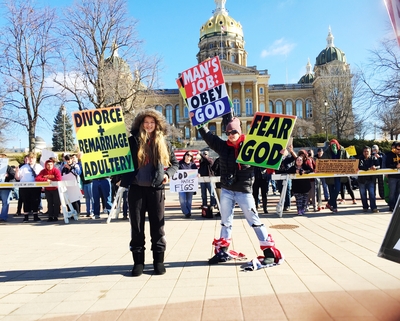
Because, wouldn’t the world be better with fewer Christians like this
and more spiritual people like this?
Posted in Uncategorized
Tagged agnostic, atheist, Christian, mainstream Christianity, Pew Research Center, Rob Bell, Spirital Christians
Leave a comment